How it works
What actually happens in a home energy audit
In Canada a home energy audit is called an EnerGuide evaluation. It’s a measurement visit, not a sales visit: a registered energy advisor tests your house with real instruments and hands you a ranked list of upgrades. Here’s the whole arc, from booking to rebate cheque.
Before anyone visits: the free planner gives you an estimate of what your house likely needs, what it could save and which tests to ask for. It’s a starting point; the evaluation measures your actual house.
Booking
Book a registered energy advisor
EnerGuide evaluations are done by energy advisors registered with Natural Resources Canada (NRCan), working for licensed service organizations: the only providers whose reports count for rebates. In most provinces you book them directly; in others (Nova Scotia, New Brunswick, PEI, Yukon and the NWT) you go through the provincial or territorial program, which subsidizes the visit.
The visit and the report
The walk-through and measurements
The advisor measures insulation in the attic, walls and basement, records your windows and doors, notes your heating, cooling and water-heating equipment, and photographs it all for quality assurance.
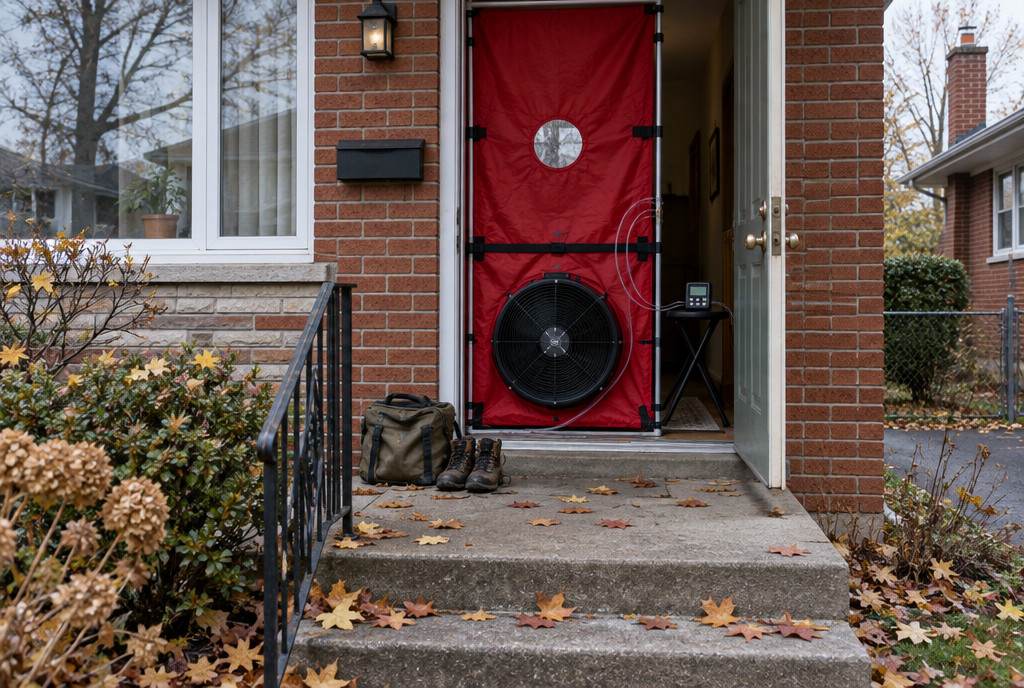
The blower door test
A calibrated fan depressurizes the house to measure air leakage precisely. While it runs, you and the advisor can feel where outside air gets in: the attic hatch, the rim joists, pot lights, trim. It’s the moment the house stops being a mystery.
Your rating and upgrade report
You get an EnerGuide rating (in gigajoules a year: lower is better), an official label, and a renovation upgrade report that ranks improvements by what they’d save in your house.
After the visit
Do the upgrades and claim your rebates
What you can claim depends on your province. For example, BC’s Home Energy Improvement Bonus pays for the measured improvement between two evaluations, Manitoba rebates $400 on the evaluation itself, and in Ontario the Home Renovation Savings Program pays $600 toward the two assessments when you install at least two recommended upgrades and both visits come from one of its seven approved organizations. Most programs count only work done after the first evaluation.
The follow-up confirms it
For rebates that pay on measured results, the advisor comes back after the work, re-tests the house and documents the improvement, and that report is what the program pays on. Deadlines vary by program (Ontario’s follow-up, for instance, must be done by December 31, 2026). You keep the before-and-after numbers, which are useful at resale.
Common questions
How long does the evaluation take?
Plan for 2–3 hours on site for a typical house. The advisor needs access to the attic hatch, basement, mechanical room and every exterior wall. The follow-up visit after your upgrades is shorter.
What is a blower door test?
A calibrated fan fitted into an exterior door pulls air out of the house until it reaches a standard test pressure, which measures how leaky the house is and shows where outside air gets in. It’s the measurement that separates a real energy audit from a sales walk-through.
What do I get afterwards?
Your EnerGuide rating and label, plus a renovation upgrade report: a ranked list of improvements with their estimated savings for your house. Rebate programs that need an evaluation use this report to decide what qualifies.
Do I need the follow-up visit?
Only if your rebates depend on it. Programs that pay on measured improvement, such as BC’s Home Energy Improvement Bonus or Ontario’s Home Renovation Savings assessment path, need a second evaluation after the work, and each program sets its own deadline. Check your province’s program page before you start.
Ready to measure instead of guess?
Tell us where you are and what you’re planning. We’ll connect you with a registered service organization for your area — no spam, no shared lead lists.