Provincial guide · program status verified per item

Home energy audits in Quebec

Quebec runs two main programs. The government's Rénoclimat pays for insulation and high-performance windows and, since October 1, 2026, no longer requires an evaluation (it pays up to $500 toward one); it also added a flood-protection component. Hydro-Québec's LogisVert pays for heat pumps, roof insulation in electrically heated houses, appliances and solar.

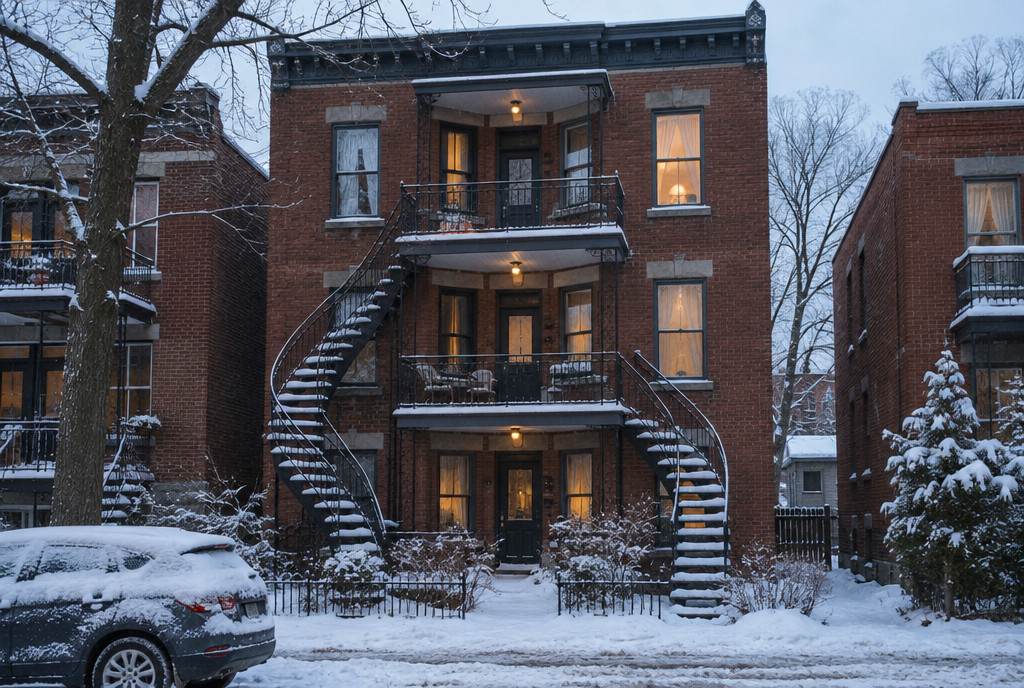
A brick Montréal plex with exterior spiral staircases in winter

The housing stock, read like an auditor

Montreal's plexes — with their exterior stairs, shared walls, and 1900–1950 bones — are their own retrofit discipline; the regions add farmhouses and mid-century bungalows heated with everything from hydro baseboards to oil. Winters are long enough that envelope work pays even at Quebec's low electricity prices.

The climates of Quebec: what homes here need

Electricity heats most homes (70% with baseboards or other electric heat, 16% with heat pumps), and Hydro-Québec's rates are among North America's lowest, about 8.3¢/kWh in Montreal (2025). Ice storms, heavy rain and spring floods are the main weather hazards.

Radon: About 1 in 6 homes tested at or above 200 Bq/m³ in the 2024 survey, including the Montreal area; Sherbrooke ranked among Canada's highest municipalities.

Great Lakes–St. Lawrence covers 8 cities we cover: Montréal, Laval, Gatineau, Longueuil, Sherbrooke, Trois-Rivières, Terrebonne, Saint-Jean-sur-Richelieu

Great Lakes–St. Lawrence Southern Ontario and southern Quebec

What homes need in Southern Ontario and southern Quebec

Cold winters and hot, humid summers: seal the attic, dry the basement, plan cooling.

This region has real winters and hot, humid summers, so bills come from both heating and cooling. Natural gas heats most Ontario homes, while most Quebec homes use low-cost electricity. An EnerGuide evaluation here should cover air sealing and the attic, cooling and dehumidification, and keeping the basement dry before insulating it.

  1. Seal air leaks and top up the attic

    Air sealing is still the first retrofit. In the snowier Ottawa–Montreal–Sherbrooke belt, a leaky, under-insulated attic also causes ice dams.

  2. Right-size cooling to control humidity

    In humid summers, an oversized air conditioner or heat pump cools quickly but shuts off before removing moisture, leaving rooms clammy. A heat pump replacing the air conditioner also covers much of the heating.

  3. Keep the basement dry before insulating

    Basements can be about 20% of heat loss, but insulating a damp basement from the inside can rot the new wall. Flash floods have hit Toronto and Montreal repeatedly.

When to book: Book the evaluation in winter (December to February) for clear thermal scans, and start a 3-month radon test in fall. Check the basement after spring thaw or heavy rain, and line up cooling work before summer.

Everything homes in Montréal need →

Sources for this climate guide · checked October 26, 2026

Very Cold East covers 3 cities we cover: Québec City, Lévis, Saguenay

Very Cold East Northern Ontario, Saguenay, Quebec City

What homes need in Northern Ontario, Saguenay, Quebec City

Deep, snowy winters: stop ice dams, and pair a cold-climate heat pump with backup heat.

Winters here are long and deep, with cold snaps of −25°C to −31°C and the heaviest snow loads of any region we cover. Heat escaping into the attic melts roof snow from below, which refreezes as ice dams. An EnerGuide evaluation here should focus on the attic, the basement and rim joists, and a heating plan with reliable backup heat.

  1. Stop ice dams at the attic

    NRCan says the best way to prevent ice dams is sealing attic air leaks and insulating thoroughly, so roof snow stays frozen. Snow loads here are the heaviest of any region we cover.

  2. Cold-climate heat pump with reliable backup

    Cold snaps of −25°C to −31°C are at or beyond many heat pumps' limits, so backup heat is a must: baseboards in most Quebec homes, the furnace in Ontario.

  3. Insulate the basement and rim joists

    Basements can be about 20% of a home's heat loss, and the long cold season makes the savings add up. Rim joists are often among the leakiest spots.

When to book: Book the evaluation from November to March for clear thermal scans, and check the attic after the first light snow. Start a 3-month radon test in the heating season.

Everything homes in Québec City need →

Sources for this climate guide · checked October 26, 2026

Programs in Quebec: what's actually live

live

Insulation & windows · evaluation optional since Oct 1, 2026

Rénoclimat

New rules since October 1, 2026: insulation paid per square foot (up to $2,000 for the roof, $7,000 for walls and $2,500 for foundations in a house), ENERGY STAR Most Efficient windows at $300 each, up to $500 toward an optional evaluation, and a new flood-protection Adaptation component. Work must be done by RBQ-licensed contractors, and claims go through a new online portal expected this fall. The old evaluation-first rules apply only if you requested a pre-work evaluation by October 12, 2026.

Full program guide → · Official page ↗ · verified October 8, 2026

live

Heat pumps $50–$120 per 1,000 BTU/h · roof insulation $1,500

Hydro-Québec LogisVert

Heat pump grants scaled to capacity (ENERGY STAR models required since November 26, 2025; up to $6,700), plus roof insulation with caulking ($1,500 in electrically heated houses), appliances and solar ($1,000/kW). The measure that ended in August 2025 was heat pumps installed with caulking, not roof insulation.

Full program guide → · Official page ↗ · verified October 8, 2026

closed

2026–27 registration ended

Greener Homes Affordability (QC delivery)

Hydro-Québec's free upgrades for modest-income households, Quebec's delivery of the federal Affordability Program, closed registration for the 2026–27 season and is processing the applications already received.

Full program guide → · Official page ↗ · verified October 8, 2026

The federal picture

announced National Heat Pump Rebate (new): Announced October 8, 2026 and expected to open early 2027: $2,000 toward an eligible cold-climate air-source heat pump, or up to $10,000 for households below the median income. Apply online, approval within 24 hours, no EnerGuide evaluation, and it can be combined with provincial rebates. Not open yet. What we know → ↗

closed Canada Greener Homes Grant & Loan: The grant closed to new applicants in February 2024; the interest-free loan (up to $40,000) stopped taking applications October 1, 2025 and its funding is fully committed. Approved applicants keep their funding — new ones can't join. ↗

live Greener Homes Affordability Program: Free direct-install retrofits (insulation, heat pumps) for low-to-median-income owners and tenants, expanded June 29, 2026 with over $500 million, delivered through provincial partners in BC, Manitoba, Newfoundland and Labrador, Nova Scotia, PEI and Quebec (Quebec's 2026–27 registration has ended), with more to be listed. You apply through your province's program, never through cold-callers. ↗

closed Oil to Heat Pump Affordability (OHPA): Closed to new applications July 31, 2026 (approved participants have until January 31, 2027 to submit receipts). Where NRCan delivered it directly (Alberta, Manitoba, the Northwest Territories, Quebec and Saskatchewan), it paid up to $10,000 toward oil-to-heat-pump conversions for income-qualified households. ↗
Heat pumps in Quebec → What one costs to run against gas, oil and baseboards here, every heat pump rebate with its equipment rule, and the certified cold-climate systems and brands that suit the winters.

Local guides for 11 cities in Quebec

Each city page covers 16 audit and testing services with that city's own climate, housing age and service organizations. The bar shows its houses by construction era, oldest first. HDD is heating degree-days: the higher the number, the longer and colder the heating season. The share built before 1961 matters because older houses usually leak more and have less insulation.

Monitor & test in Quebec

Local geology, water sources, and climate set the home-health checklist. Each item links to its full guide; the 30-second screener personalizes it to your exact house.

Radon

The Appalachian belt and pockets across the province test high; Montreal Island varies block to block. Every home: one winter kit, especially with a basement bedroom or office.

Wells in the regions

Quebec well owners test through accredited private labs — bacteria seasonally, chemistry periodically. Keep the reports; notaries ask.

Plex ventilation

Stacked flats with one leaky envelope and no mechanical ventilation are Quebec's signature moisture case — measure the fans, then fix causes.

Heating-oil legacies

Oil furnaces and their tanks linger in the regions: annual servicing, in-date CO alarms, and — at replacement — LogisVert makes the heat pump the obvious quote to get.

Run your Quebec home through the planner

Postal code in, plan out: your era's likely story, the tests to ask for by name, and the Quebec programs above matched to your situation.

Check my home →

Other provinces: British Columbia · Alberta · Saskatchewan · Manitoba · Ontario · New Brunswick · Nova Scotia · Prince Edward Island · Newfoundland & Labrador · The North (YT · NT · NU)

Find a registered advisor in Quebec

NRCan-registered service organizations work in every province. Tell us where you are and what you're planning — we'll point you at the right door, with your province's programs flagged.