Provincial guide · program status verified per item

Home energy audits in Saskatchewan

Saskatchewan's Home Efficiency Retrofit Rebate ended in April 2026, and no rebate has replaced it. What's left is the Home Renovation Tax Credit (10.5%, up to $420 a year), SaskEnergy rebates on high-efficiency gas equipment, and free upgrades for income-qualified homes. Air sealing and insulation still pay back, just through your bills instead of a rebate cheque.

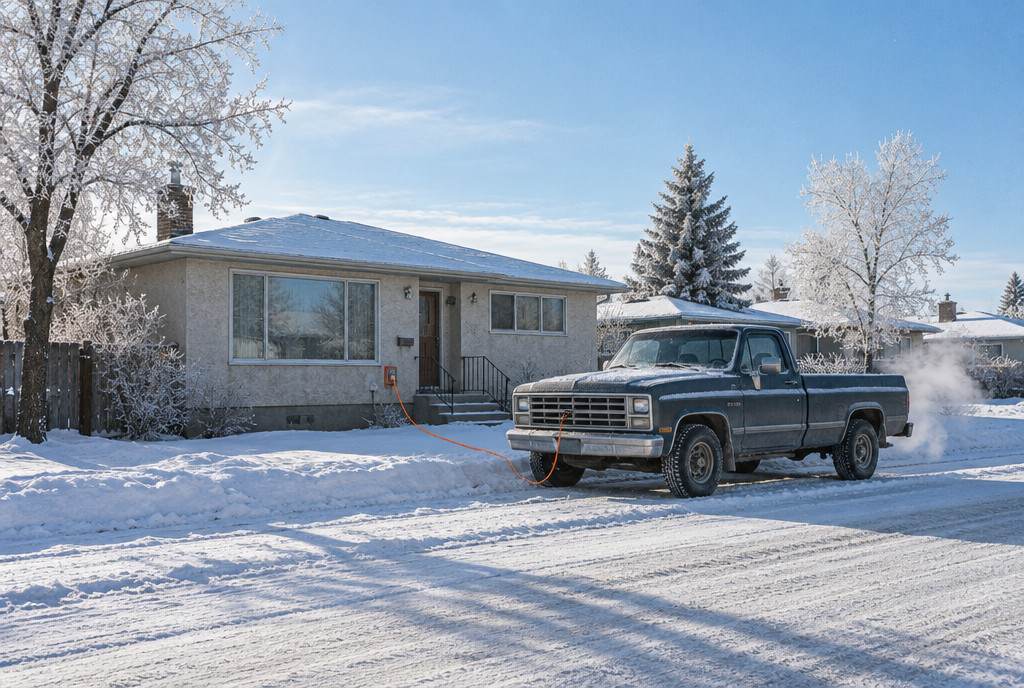
A stucco bungalow on a frosty Prairie street, a pickup truck plugged in for its block heater

The housing stock, read like an auditor

Wartime and post-war stock in Regina and Saskatoon with empty walls and thin attics, farmhouses exposed to open-prairie wind, and winters that hold deep cold for months. Blower-door numbers here translate to real dollars faster than almost anywhere.

Saskatchewan’s climate: what homes here need

Natural gas heats 75% of homes, and electricity costs about 17.9¢/kWh in Regina (2025). Winters are among the coldest in southern Canada, with cold snaps near −34°C to −35°C, and summers bring wildfire smoke and severe storms.

Radon: About 1 in 3 homes tested at or above 200 Bq/m³ in the 2024 survey, and Regina ranked among Canada's highest municipalities. Test every home.

Prairies covers 2 cities we cover: Saskatoon, Regina

Prairies Alberta, Saskatchewan and Manitoba

What homes need in Alberta, Saskatchewan and Manitoba

Long, very cold, very dry winters: air sealing, radon testing and humidity balance lead.

Heating is the big bill here: winters are long and very dry, and cold snaps reach −30°C to −35°C. Radon is common, and electricity prices vary widely between provinces, which changes what pays back. An EnerGuide evaluation should focus on air sealing, attic and basement insulation, a radon test and safe humidity levels.

  1. Seal the top and bottom of the house

    In deep cold, warm air rises and escapes through attic leaks while cold air is pulled in down low. Sealing both saves heat and helps prevent attic frost and ice dams.

  2. Test every home for radon

    The 2024 national survey found about 1 in 3 homes at or above Health Canada's guideline in Saskatchewan and Manitoba, and just over 1 in 6 in Alberta.

  3. Balance dry air against condensation

    Winter air is extremely dry, but humidifying too much frosts windows and can wet walls and attic sheathing. The colder it gets outside, the lower indoor humidity must be.

When to book: Book the evaluation between November and March, when cold weather makes air leaks and missing insulation easy to see. Start a 3-month radon test in the heating season, and check the attic after a cold spell.

Everything homes in Saskatoon need →

Sources for this climate guide · checked October 26, 2026

Programs in Saskatchewan: what's actually live

closed

Ended April 2026

Home Efficiency Retrofit Rebate

SaskPower and SaskEnergy say it ended in April 2026, and SaskEnergy's Energy Efficiency Discounts Program ended July 27, 2026. We list them because much of the internet still advertises them; don't budget around either.

Full program guide → · Official page ↗ · verified October 8, 2026

live

Gas equipment rebates · free income-qualified upgrades

Utility offers (SaskEnergy / SaskPower)

SaskEnergy pays $325–$1,000 for replacing a gas furnace, boiler or water heater with a high-efficiency model (apply within 120 days). SaskPower's Energy Assistance Program gives income-qualified households free upgrades, including a smart thermostat if eligible, and participants may qualify for SaskEnergy's free furnace upgrade. Neither utility lists a heat pump rebate.

Full program guide → · Official page ↗ · verified October 8, 2026

live

10.5% · up to $420 a year ($525 seniors)

Home Renovation Tax Credit

A non-refundable provincial credit for 2025 and later tax years: 10.5% of renovation expenses above $1,000, up to $5,000 ($6,000 for seniors), incurred on or after October 1, 2024 on your principal residence. Windows, doors, furnaces and ventilation qualify; your own labour and appliances don't.

Full program guide → · Official page ↗ · verified October 8, 2026

The federal picture

announced National Heat Pump Rebate (new): Announced October 8, 2026 and expected to open early 2027: $2,000 toward an eligible cold-climate air-source heat pump, or up to $10,000 for households below the median income. Apply online, approval within 24 hours, no EnerGuide evaluation, and it can be combined with provincial rebates. Not open yet. What we know → ↗

closed Canada Greener Homes Grant & Loan: The grant closed to new applicants in February 2024; the interest-free loan (up to $40,000) stopped taking applications October 1, 2025 and its funding is fully committed. Approved applicants keep their funding — new ones can't join. ↗

live Greener Homes Affordability Program: Free direct-install retrofits (insulation, heat pumps) for low-to-median-income owners and tenants, expanded June 29, 2026 with over $500 million, delivered through provincial partners in BC, Manitoba, Newfoundland and Labrador, Nova Scotia, PEI and Quebec (Quebec's 2026–27 registration has ended), with more to be listed. You apply through your province's program, never through cold-callers. ↗

closed Oil to Heat Pump Affordability (OHPA): Closed to new applications July 31, 2026 (approved participants have until January 31, 2027 to submit receipts). Where NRCan delivered it directly (Alberta, Manitoba, the Northwest Territories, Quebec and Saskatchewan), it paid up to $10,000 toward oil-to-heat-pump conversions for income-qualified households. ↗
Heat pumps in Saskatchewan → What one costs to run against gas, oil and baseboards here, every heat pump rebate with its equipment rule, and the certified cold-climate systems and brands that suit the winters.

Local guides for 2 cities in Saskatchewan

Each city page covers 16 audit and testing services with that city's own climate, housing age and service organizations. The bar shows its houses by construction era, oldest first. HDD is heating degree-days: the higher the number, the longer and colder the heating season. The share built before 1961 matters because older houses usually leak more and have less insulation.

Monitor & test in Saskatchewan

Local geology, water sources, and climate set the home-health checklist. Each item links to its full guide; the 30-second screener personalizes it to your exact house.

Radon — the Prairies' quiet issue

Saskatchewan consistently ranks among the higher radon regions in national surveying. Every basement bedroom is a reason to run the winter kit.

Farm and rural wells

Bacteria plus nitrates near cropland — test on the seasonal rhythm and add chemistry panels; your provincial lab or health office lists the route.

Deep-cold humidity swings

Winter air this cold drives indoor humidity to extremes — a hygrometer per level tells you whether you're too dry (January) or too damp (July basement).

Wood and dual heat CO

Dual-fuel and wood-assisted heating is common — in-date alarms by every sleeping area and annual servicing are the baseline.

Run your Saskatchewan home through the planner

Postal code in, plan out: your era's likely story, the tests to ask for by name, and the Saskatchewan programs above matched to your situation.

Check my home →

Other provinces: British Columbia · Alberta · Manitoba · Ontario · Quebec · New Brunswick · Nova Scotia · Prince Edward Island · Newfoundland & Labrador · The North (YT · NT · NU)

Find a registered advisor in Saskatchewan

NRCan-registered service organizations work in every province. Tell us where you are and what you're planning — we'll point you at the right door, with your province's programs flagged.