Provincial guide · program status verified per item

Home energy audits in Nova Scotia

Efficiency Nova Scotia (EfficiencyOne) runs one of Canada's most complete program sets: assessment-based rebates for everyone, a moderate-income tier, and HomeWarming's free upgrades for income-qualified households. The federal oil-to-heat-pump money is spent out here and the new federal heat pump rebate won't open until early 2027, so for now the provincial stack is what remains, and it's substantial.

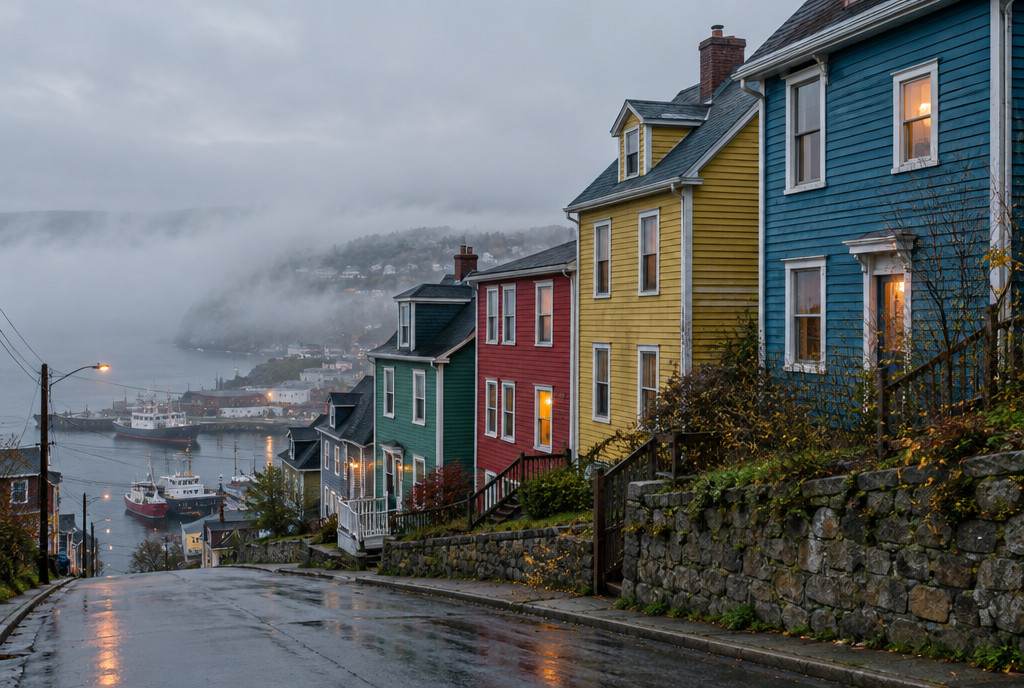
Colourful wooden row houses on a steep street above a foggy Atlantic harbour

The housing stock, read like an auditor

Canada's oldest housing stock by share in many communities: wood-frame homes that have seen two centuries of Atlantic weather, plus post-war Halifax suburbs. Oil heat's share was long the country's highest — which is why conversion programs hit Nova Scotia first and hardest.

Nova Scotia’s climate: what homes here need

Oil still heats 28% of homes, and its price rose 65% in a year to about $2.31 a litre in Halifax (September 2026). Heat pumps already heat about 31% of homes. Electricity costs about 20.5¢/kWh in Halifax, and hurricanes and post-tropical storms bring outages.

Radon: More than 1 in 3 homes (36.8%) tested at or above 200 Bq/m³ in the 2024 survey, and Halifax ranked among Canada's highest municipalities.

Atlantic Canada covers this city we cover: Halifax

Atlantic Canada Maritimes and Newfoundland

What homes need in Maritimes and Newfoundland

Damp, windy, icy winters and costly oil: switch to heat pumps, seal, test for radon.

Atlantic winters are wet, windy and icy rather than extremely cold, and summers are mild. Heating oil is still common and its price rose sharply in 2026, while heat pumps already heat many homes. An EnerGuide evaluation here should plan the move off oil, seal wind-driven leaks, fix moisture before insulating, and include a radon test.

  1. Plan your move off oil

    Oil prices rose 65% to 81% in a year, and corrosion is a leading cause of oil tank leaks. Cold-climate heat pumps can be up to three times as efficient as oil heating.

  2. Seal wind-driven leaks and the attic

    Wind pushes cold air through gaps, and heavy, wet snow with frequent freezing rain makes a leaky attic prone to ice dams.

  3. Fix moisture before you insulate

    Halifax, St. John's, Saint John and Charlottetown get enough wind-driven rain that new walls must have a rainscreen. Stop water getting into walls and basements before adding insulation.

When to book: Book the evaluation from December to March, on a calm day, for the best blower door and thermal scan results. Have oil equipment checked before winter, and start a 3-month radon test in fall.

Everything homes in Halifax need →

Sources for this climate guide · checked October 26, 2026

Programs in Nova Scotia: what's actually live

live

Assessment $199 · rebates up to $5,000

Home Energy Assessment path

The assessment costs $199 (waived for households under Efficiency Nova Scotia's income threshold) and opens rebates of up to $5,000, including $300–$600 per ton for heat pumps. Finish the work within 12 months of the first assessment.

Full program guide → · Official page ↗ · verified October 8, 2026

income-qualified

Moderate Income Rebate up to $5,000 more · HomeWarming free

Moderate Income Rebates + HomeWarming

The Moderate Income Rebate adds up to $5,000 on top of the standard $5,000 (up to $10,000 in all) for homes not heated mainly by electricity; Efficiency Nova Scotia cut its maximum from $10,000 after the federal oil-to-heat-pump funding ended. HomeWarming installs free upgrades for income-qualified homeowners; renters aren't eligible. NS also delivers the federal Affordability Program through HomeWarming and the African Nova Scotian Communities Retrofit program.

Full program guide → · Official page ↗ · verified October 8, 2026

closed

Closed to new applicants July 2, 2026

Oil to Heat Pump Affordability (NS)

Efficiency Nova Scotia allocated its federal oil-to-heat-pump funding and stopped taking applications on July 2, 2026; the national program closed July 31. If a contractor is still selling it, walk.

Full program guide → · Official page ↗ · verified October 8, 2026

The federal picture

announced National Heat Pump Rebate (new): Announced October 8, 2026 and expected to open early 2027: $2,000 toward an eligible cold-climate air-source heat pump, or up to $10,000 for households below the median income. Apply online, approval within 24 hours, no EnerGuide evaluation, and it can be combined with provincial rebates. Not open yet. What we know → ↗

closed Canada Greener Homes Grant & Loan: The grant closed to new applicants in February 2024; the interest-free loan (up to $40,000) stopped taking applications October 1, 2025 and its funding is fully committed. Approved applicants keep their funding — new ones can't join. ↗

live Greener Homes Affordability Program: Free direct-install retrofits (insulation, heat pumps) for low-to-median-income owners and tenants, expanded June 29, 2026 with over $500 million, delivered through provincial partners in BC, Manitoba, Newfoundland and Labrador, Nova Scotia, PEI and Quebec (Quebec's 2026–27 registration has ended), with more to be listed. You apply through your province's program, never through cold-callers. ↗

closed Oil to Heat Pump Affordability (OHPA): Closed to new applications July 31, 2026 (approved participants have until January 31, 2027 to submit receipts). It paid up to $15,000 (plus a one-time $250 payment) toward oil-to-heat-pump conversions for income-qualified households. Efficiency Nova Scotia stopped taking applications even earlier, on July 2, 2026. ↗
Heat pumps in Nova Scotia → What one costs to run against gas, oil and baseboards here, every heat pump rebate with its equipment rule, and the certified cold-climate systems and brands that suit the winters.

Local guides for 1 city in Nova Scotia

Each city page covers 16 audit and testing services with that city's own climate, housing age and service organizations. The bar shows its houses by construction era, oldest first. HDD is heating degree-days: the higher the number, the longer and colder the heating season. The share built before 1961 matters because older houses usually leak more and have less insulation.

Monitor & test in Nova Scotia

Local geology, water sources, and climate set the home-health checklist. Each item links to its full guide; the 30-second screener personalizes it to your exact house.

Radon

Nova Scotia's granite and slate geologies produce real radon variation — community results have run high in parts of the mainland. Test over winter, whatever your neighbour's number was.

Wells and coastal water

Bacteria seasonally, chemistry periodically — with arsenic and uranium on the panel; both show up in NS bedrock wells often enough to test for by default.

Wind-driven moisture

Two-century-old envelopes plus Atlantic storms: diagnose moisture paths before any insulation project, and treat musty basements as a cause hunt, not a cleaning job.

Run your Nova Scotia home through the planner

Postal code in, plan out: your era's likely story, the tests to ask for by name, and the Nova Scotia programs above matched to your situation.

Check my home →

Other provinces: British Columbia · Alberta · Saskatchewan · Manitoba · Ontario · Quebec · New Brunswick · Prince Edward Island · Newfoundland & Labrador · The North (YT · NT · NU)

Find a registered advisor in Nova Scotia

NRCan-registered service organizations work in every province. Tell us where you are and what you're planning — we'll point you at the right door, with your province's programs flagged.