How Richmond is built
- Before 1961 5%
- 1961–1990 45%
- 1991–2000 21%
- 2001 or later 31%
What inspections find in Richmond attics
Of Richmond's 46,950 houses (single-detached, semi-detached, row houses and duplexes), 4% were built before 1961 and 49% before 1991, according to the 2021 Census. Attics in older houses commonly have a fraction of today's recommended insulation, and top-ups done over the years often buried air leaks instead of sealing them first.
Richmond gets about 2,768 heating degree-days a year, a measure of how much heating its climate needs, and its winter design temperature, the cold day heating systems are sized for, is −4.4°C. Those figures come from the climate data for Vancouver International in HOT2000, the home-energy software Natural Resources Canada (NRCan) gives energy advisors. That's the 5th-lowest heating demand of the 70 cities we cover. With winters this mild, extra attic insulation pays back more slowly on heating alone; keeping upstairs rooms cooler in summer and stopping damp air reaching the roof deck count too.
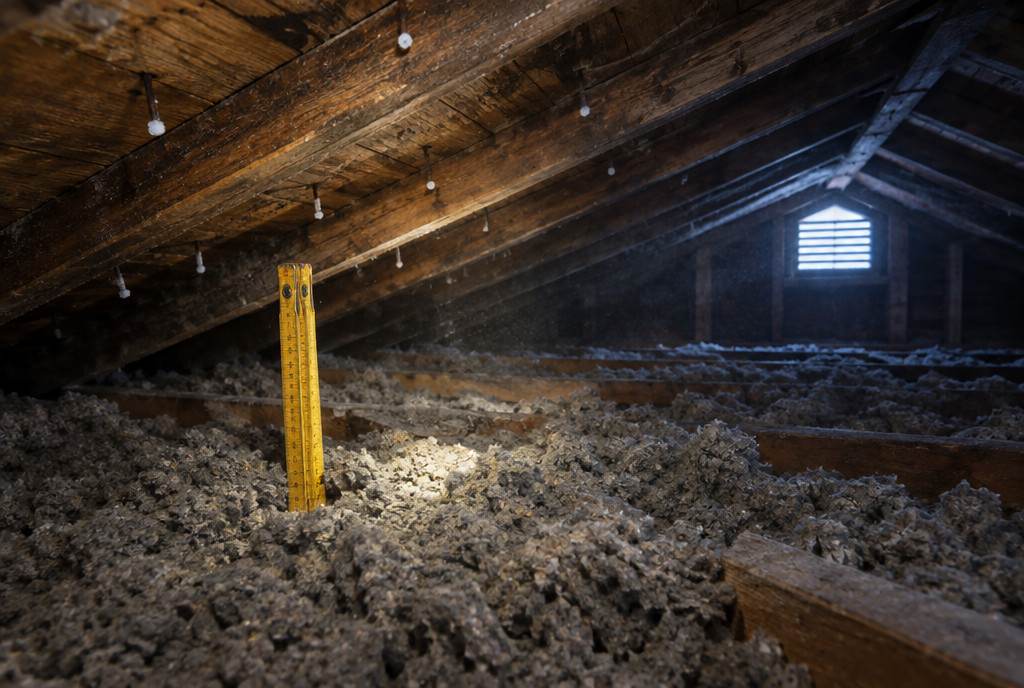
Vermiculite. Loose, pebbly, grey-brown or silver-gold insulation may contain asbestos. Health Canada's advice is not to disturb it; have it sampled before any attic work. Asbestos and vermiculite testing in Richmond
The right order for the work
- Seal the air leaks first: top plates, pot lights, plumbing stacks, the hatch.
- Fix ventilation baffles so new insulation doesn't block soffit vents.
- Then top up the insulation. Burying unsealed leaks under new insulation wastes much of the benefit.
Coastal BC Lower Mainland and Vancouver Island
What this means in Richmond’s climate
Mild, wet winters and summer heat waves: fix moisture first, then cooling and heat pumps.
Why it matters here: Checks insulation depth and looks for damp or stained roof sheathing, a sign of roof leaks or warm, moist air escaping into the attic.
Best timing: During or just after the October-to-March rainy season, when wetting is at its peak.
- Fix moisture before tightening up. Heavy winter rain soaks walls and roofs here. Insulation makes outer layers colder and slower to dry, so fix leaks, condensation and mould first, or upgrades can trap water. Ask: Ask the registered energy advisor to note stains, damp spots and roof or window leaks, and to check that bath and kitchen fans vent outdoors.
- Seal air leaks, then top up the attic. NRCan calls air sealing the most important retrofit. Pair it with attic insulation: today's new-home minimum here is about R-39, a useful target for older attics. Ask: Ask for a blower door test before and after sealing, so you can see the drop in ACH50.
What else homes in Richmond need →
Sources for this climate guide · checked October 26, 2026
- National Building Code of Canada 2020, climate data (NRC)
- Canadian Climate Normals 1991–2020 (ECCC)
- Keeping the Heat In (NRCan)
- Air-Source Heat Pump Sizing and Selection Guide (NRCan)
- Heat pump basics (NRCan)
- Heating and Cooling With a Heat Pump (NRCan)
- Primary heating systems by household, Table 38-10-0286-01 (Statistics Canada)
- Electricity price comparison, April 2025 (Hydro-Québec)
- BC Coroners Service review of 2021 heat deaths
- Wildfire smoke, filtration and cooling (Island Health)
- Wildfire smoke: protecting your health (Government of Canada)
- Canada's top weather stories of 2020 (ECCC)
- Canada's most impactful weather stories of 2024 (ECCC)
- 2024 Cross-Canada Survey of Radon Exposure
- Guide for Radon Measurements in Homes (Health Canada)
- Conditions for thermal scans, ASTM C1060 summary (Cx Associates)
- Canada's top weather stories of 2022 (ECCC)
NRCan-licensed service organizations serving Richmond
A service organization is a company that Natural Resources Canada (NRCan) licenses to deliver EnerGuide evaluations; its registered energy advisors do the home visit. Every EnerGuide evaluation includes an attic inspection: insulation depth, air leaks and red flags such as vermiculite or knob-and-tube wiring.
- Acacia Engineering
- All Season Inspection Profile
- AmeriSpec Profile
- Canada Energy Audit Profile
- Capital Home Energy
- City Green Solutions
- CoEfficient Building Science
- Energy Werx Profile
- Enerhold Engineering Solutions
- Enerhome Consulting
- EnerSolution Profile
- EnerTech Solutions
- EnerVision
- Engreen Home
- GETS Energy
- Green Canada Home Advisors Profile
- Green Think
- Greenbrain Profile
- Homesol Building Solutions
- HomeStep.ca
- HomeTech Energy Solutions
- Isle Energy Consulting
- NRGwise (A1 NRGwise Consulting) Profile
- Sensible Home Inspections
- The Energuy Profile
- VerdaTech Energy Management and Consulting
- ER Energy Solutions
Insulation programs in Richmond
Attic insulation inspection in Richmond: common questions
How much attic insulation should a Richmond house have?
Advisors commonly target around R-50 to R-60 in attics. Your EnerGuide report gives the recommendation for your house.
Can I top up the insulation myself?
Only after the air leaks are sealed and you've confirmed there is no vermiculite. The inspection tells you both.
Does attic insulation help in summer?
Yes. Sealing and insulating the attic floor slows the heat that builds up under the roof from reaching the rooms below, so upstairs bedrooms stay cooler. Keep the soffit vents clear with baffles so the attic can still dry out in damp months.