How Lethbridge is built
- Before 1961 19%
- 1961–1990 35%
- 1991–2000 11%
- 2001 or later 35%
When to book in Lethbridge
Lethbridge gets about 4,274 heating degree-days a year, a measure of how much heating its climate needs, and its winter design temperature, the cold day heating systems are sized for, is −26.1°C. Those figures come from the climate data for Lethbridge in HOT2000, the home-energy software Natural Resources Canada (NRCan) gives energy advisors. That gives Lethbridge a long window, roughly late fall to early spring, when the inside-outside difference comfortably exceeds the 10°C an infrared scan needs.
What the camera finds in Lethbridge houses
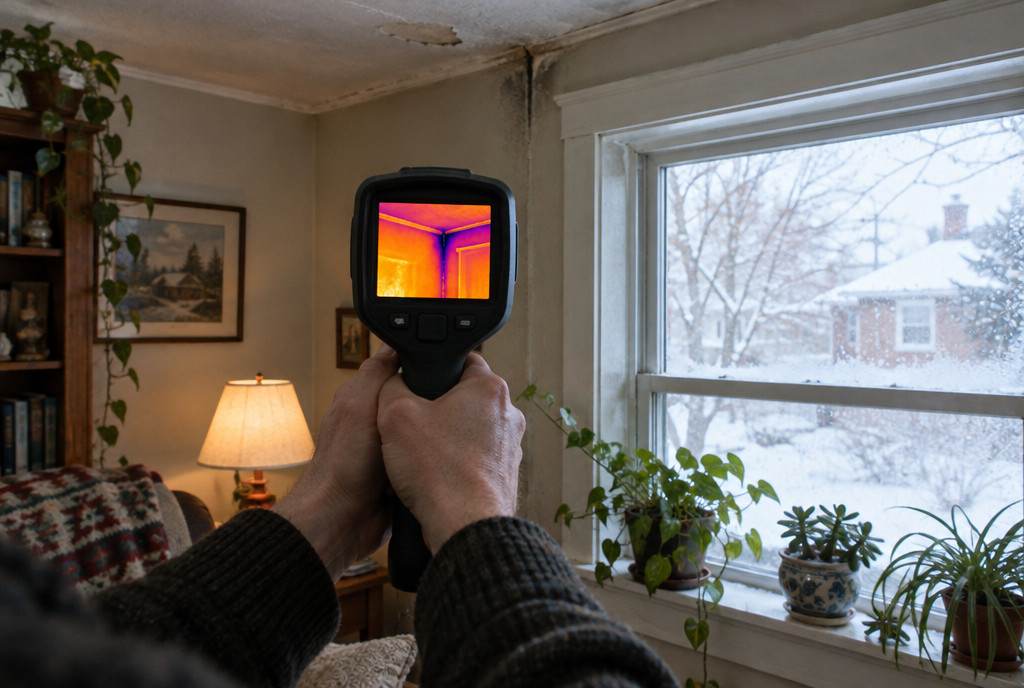
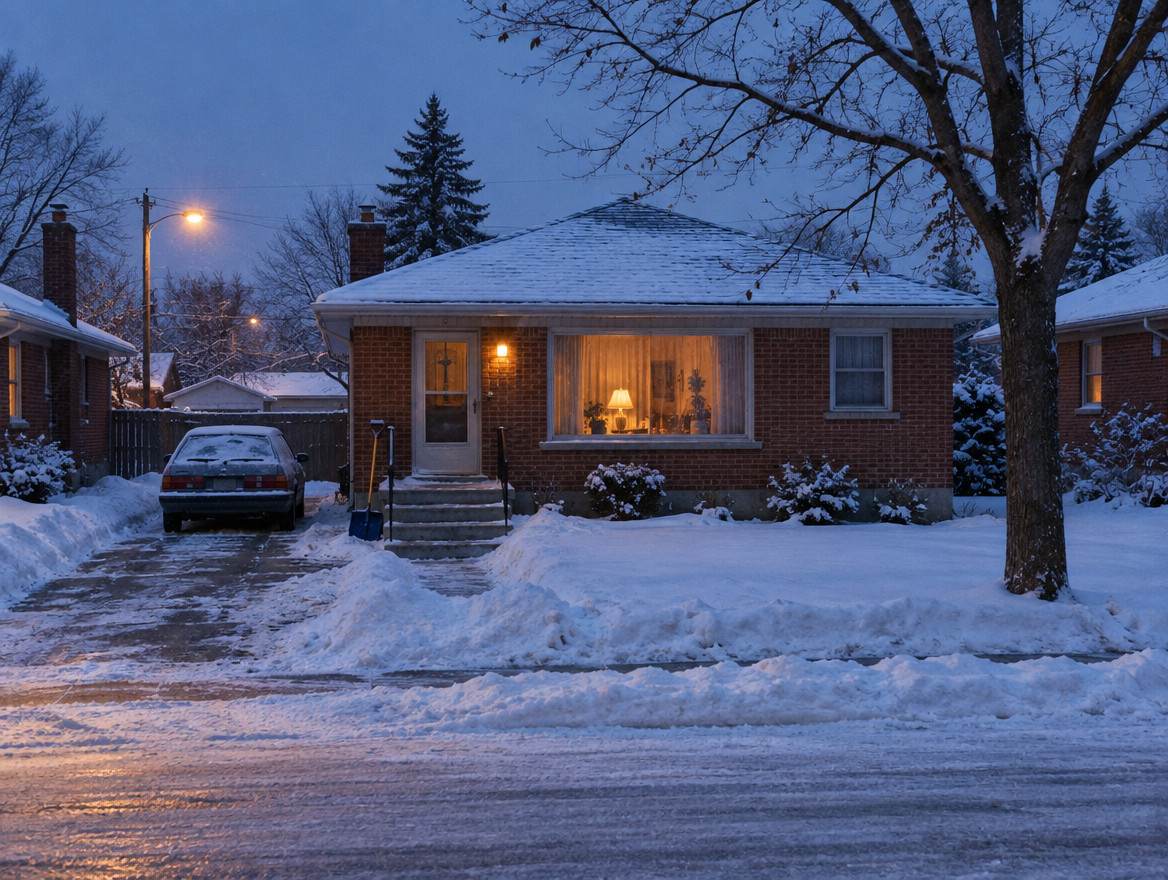
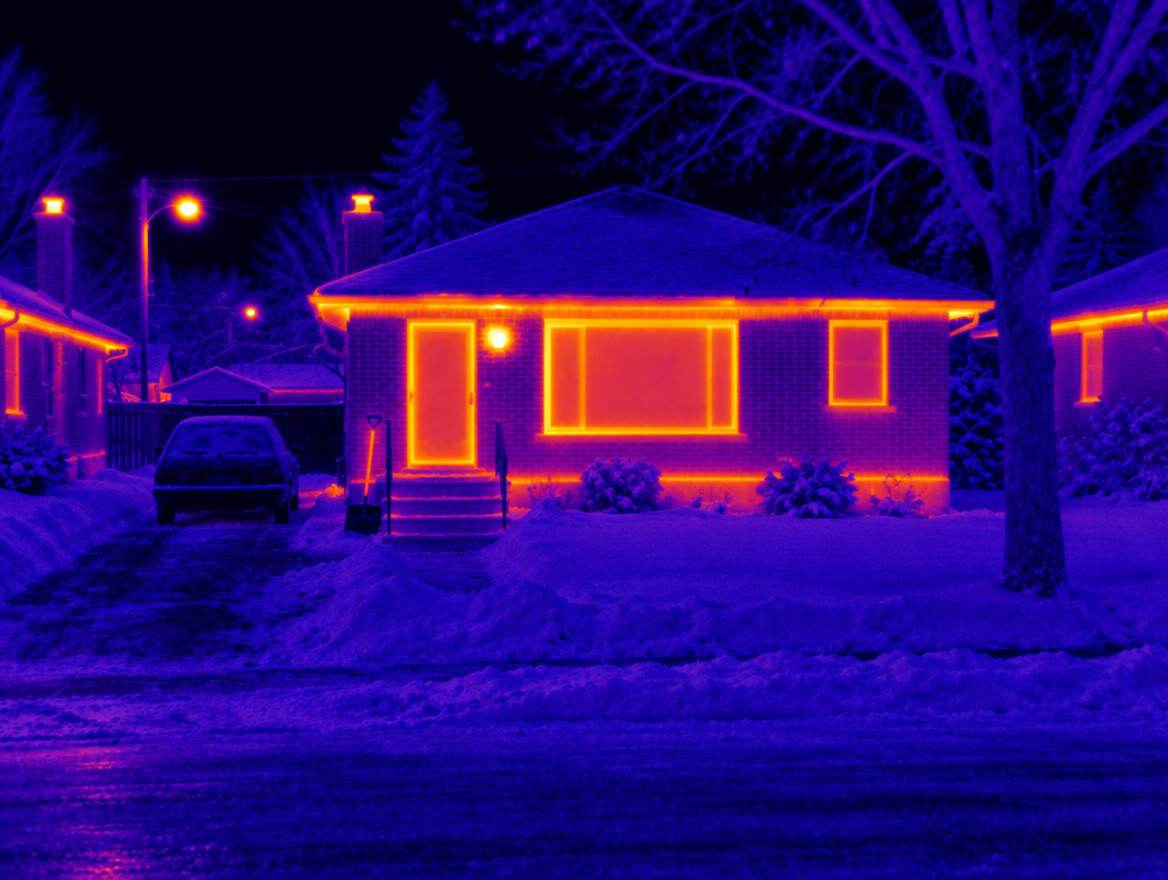
Of Lethbridge's 33,945 houses (single-detached, semi-detached, row houses and duplexes), 19% were built before 1961 and 54% before 1991, according to the 2021 Census. Older houses are where the camera earns its keep: empty or settled wall cavities, gaps at the top of walls, and cold corners where framing bridges the insulation. Run it with the blower door test depressurizing the house and every leak shows up as a cold streak.
What it costs
Most EnerGuide advisors include an infrared scan with the evaluation, but it isn't required, so confirm when you book. There's no provincial rebate or price list; the City of Edmonton's guidance is to expect more than $400 and to get two or three quotes.
Prairies Alberta, Saskatchewan and Manitoba
What this means in Lethbridge’s climate
Long, very cold, very dry winters: air sealing, radon testing and humidity balance lead.
Why it matters here: Deep cold makes missing insulation and air leaks stand out clearly.
Best timing: November to March, avoiding sunny walls and windy days.
- Seal the top and bottom of the house. In deep cold, warm air rises and escapes through attic leaks while cold air is pulled in down low. Sealing both saves heat and helps prevent attic frost and ice dams. Ask: Ask the registered energy advisor to find attic bypasses, rim joist gaps and basement penetrations during the blower door test.
- Insulate the basement and rim joists. Basements can account for about 20% of a home's heat loss. Check for cracks and water entry first; Manitoba's clay soils cracked some foundations during the 2021 drought. Ask: Ask whether the basement is dry enough to insulate from inside, and how much air leaks at the rim joist.
What else homes in Lethbridge need →
Sources for this climate guide · checked October 26, 2026
- National Building Code of Canada 2020, climate data (NRC)
- Canadian Climate Normals 1991–2020 (ECCC)
- Keeping the Heat In (NRCan)
- Air-Source Heat Pump Sizing and Selection Guide (NRCan)
- Heating and Cooling With a Heat Pump (NRCan)
- Heat pumps, Canada Greener Homes (NRCan)
- Gas and heat pump hybrid systems (NRCan)
- Primary heating systems by household, Table 38-10-0286-01 (Statistics Canada)
- Electricity price comparison, April 2025 (Hydro-Québec)
- 2024 Cross-Canada Survey of Radon Exposure
- Guide for Radon Measurements in Homes (Health Canada)
- Canada's top weather stories of 2021 (ECCC)
- Canada's most impactful weather stories of 2024 (ECCC)
- Canada's top weather stories of 2025 (ECCC)
- Conditions for thermal scans, ASTM C1060 summary (Cx Associates)
NRCan-licensed service organizations serving Lethbridge
A service organization is a company that Natural Resources Canada (NRCan) licenses to deliver EnerGuide evaluations; its registered energy advisors do the home visit. Most EnerGuide advisors bring an infrared camera, but it isn't a required part of the evaluation, so confirm when you book. The scan is most useful with the blower door running.
- Acacia Engineering
- Air Barrier Canada
- AmeriSpec Profile
- Buildingexpert
- Clean Energy Solutions
- CoEfficient Building Science
- Energy Werx Profile
- EnerHome Consulting
- EnerQuality
- EnerSolution Profile
- GETS Energy
- Green Think
- Isle Energy Consulting
- Map Energy
- Sensible Home Inspections
- The Energuy Profile
- The Home Inspectors Group Profile
- VerdaTech Energy Management and Consulting
- EnerVision
- Homesol Building Solutions
- NRGwise (A1 NRGwise Consulting) Profile
Programs and local help in Lethbridge
Thermal imaging inspection in Lethbridge: common questions
When is the best time for a thermal imaging inspection in Lethbridge?
Late fall through early spring, when it is at least 10°C colder outside than inside. Cold, overcast days with no direct sun on the walls give the clearest images.
Can a thermal camera see through walls?
No. It reads surface temperatures. Missing insulation or an air leak shows up because it changes the temperature of the wall or ceiling surface.
Who does thermal imaging in Lethbridge?
Most of the 21 NRCan-licensed organizations serving Lethbridge bring an infrared camera to an EnerGuide evaluation; confirm when you book.
Is thermal imaging the same as a thermographic inspection?
Yes. Thermography, thermal imaging and infrared scanning all mean reading surface temperatures with an infrared camera.