British Columbia · area guide · 13 communities · checked October 8, 2026
Home energy audits, radon and well water testing in the Okanagan
The thirteen municipalities on this page are home to 188,672 people (2021 Census), and 12% of their houses were built before 1961. This guide covers 13 communities, from West Kelowna, Vernon, Penticton and Summerland to the smallest hamlets, with the local numbers that shape an energy audit or a home health test.
Population (2021)
188,672
Communities listed
13
Houses built before 1961
12%
How the Okanagan is built
- Before 1961 12%
- 1961–1990 43%
- 1991–2000 18%
- 2001 or later 27%
This page covers the Okanagan Valley outside Kelowna, which has its own pages: West Kelowna, Lake Country and Peachland in the Central Okanagan, Penticton, Summerland, Oliver and Osoyoos to the south, and Vernon, Coldstream, Armstrong, Spallumcheen, Enderby and Lumby to the north.
BC Southern Interior Okanagan and Thompson valleys
the Okanagan’s climate: BC Southern Interior
Hot, smoky summers and cold winters: plan cooling, filtration and heating together.
The Okanagan and Thompson valleys have cold winters and the hottest summer afternoons and driest air of any region we cover. Wildfire smoke often keeps windows shut in summer, and radon levels are among the highest in Canada. An EnerGuide evaluation here should cover heating, cooling, smoke filtration and a radon test together.
Keep smoke out: seal leaks, filter well
When smoke rolls in, windows stay shut. A tighter house with a good filter keeps indoor air cleaner; Health Canada advises the highest-rated filter your system can handle.
Size cooling and heating together
Long hot spells mean a heat pump has to handle summer cooling as well as winter heat. Equipment sized for only one season can leave you uncomfortable in the other.
Test for radon
About 1 in 3 homes across the BC Interior tested at or above Health Canada's 200 Bq/m³ guideline in the 2024 national survey, and Kelowna was among the highest municipalities.
When to book: Book the evaluation in winter (December to February suits thermal scans), and start a 3-month radon test in fall. Get cooling and filtration in place before summer smoke season.
Everything homes in Kelowna need →
Sources for this climate guide · checked October 26, 2026
- National Building Code of Canada 2020, climate data (NRC)
- Canadian Climate Normals 1991–2020 (ECCC)
- Keeping the Heat In (NRCan)
- Air-Source Heat Pump Sizing and Selection Guide (NRCan)
- Heating and Cooling With a Heat Pump (NRCan)
- Gas and heat pump hybrid systems (NRCan)
- Primary heating systems by household, Table 38-10-0286-01 (Statistics Canada)
- Wildfire smoke: protecting your health (Government of Canada)
- Wildfire smoke, filtration and cooling (Island Health)
- Canada's top weather stories of 2021 (ECCC)
- Canada's top weather stories of 2023 (ECCC)
- 2024 Cross-Canada Survey of Radon Exposure
- Guide for Radon Measurements in Homes (Health Canada)
- Conditions for thermal scans, ASTM C1060 summary (Cx Associates)
Six local guides for the Okanagan
Energy audits and heat pump sizing
Okanagan at a glance
People and homes
188,672 people and 86,529 private dwellings in 2021, up 9.6% in population since 2016.
Housing
Of the 64,120 houses in the Okanagan (single-detached, semi-detached, row houses, duplexes and mobile homes), 12% were built before 1961 and 55% before 1991, according to the 2021 Census. The typical house dates from 1981–1990.
Climate
Environment and Climate Change Canada's 1981–2010 climate normal at Penticton Airport (4.2 km from Penticton) is 3,341 heating degree-days a year, with a January mean of −0.6°C. At Winfield, 27.5 km from Vernon, the normal is 3,529 heating degree-days, with a January mean of −1.9°C. The building code's 2.5% January design temperatures for the area run from −14°C to −20°C.
Radon
In Health Canada’s 2012 survey, 17.4% of 109 homes tested in the Okanagan Health Service Delivery Area were above the guideline. The larger 2024 Cross-Canada survey reports 28.5% (1 in 3) of houses at or above the guideline for the Kelowna metro area.
Energy advisors
NRCan's list (checked October 8, 2026) shows 24 service organizations registered for postal codes in Penticton, Vernon, Westbank (West Kelowna) and Winfield (Lake Country). Confirm they travel to your community.
Heating
In the Kelowna metro area, 72% of households heat mainly with a forced-air furnace and natural gas is the main heating energy for 63% (Statistics Canada, 2023).
Every community in the Okanagan
Grouped by municipality, with 2021 Census populations. Names come from Natural Resources Canada's geographical names database and Statistics Canada's population centres.
- Vernon 44,519
- Penticton 36,885
- West Kelowna 36,078
- Lake Country 15,817
- Summerland 12,042
- Coldstream 11,171
- Peachland 5,789
- Osoyoos 5,556
- Armstrong 5,323
- Spallumcheen 5,307
- Oliver 5,094
- Enderby 3,028
- Lumby 2,063
Covered on city pages
- Kelowna 144,576Kelowna has its own pages.
Who does the work in the Okanagan
- Energy evaluations and heat loss calculations: NRCan's list (checked October 8, 2026) shows 24 registered service organizations for postal codes in Penticton, Vernon, Westbank (West Kelowna), Winfield (Lake Country). See them with phone numbers; confirm they travel to your community.
- Radon: certified measurement and mitigation professionals are listed in the C-NRPP directory ↗.
- Wood stoves and chimneys: WETT-certified professionals are listed in the WETT directory ↗; see wood-burning inspections in the Okanagan.
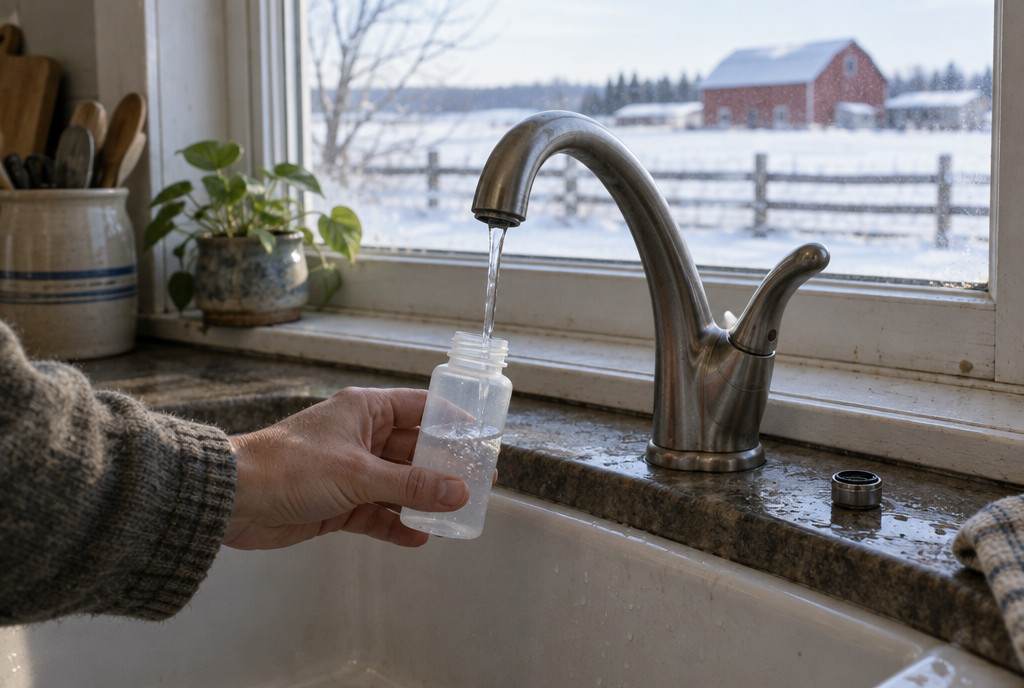
- Well water: a qualified private lab (search the CALA directory). Details for the Okanagan.
Rebates and financing for the Okanagan homes
Nearby city pages and guides
Sources
- Statistics Canada — 2021 Census population and dwelling counts (table 98-10-0002-01)
- Statistics Canada — 2021 Census, households by period of construction and dwelling type (table 98-10-0233-01)
- Statistics Canada — 2021 Census population centres (table 98-10-0011-01)
- NRCan — Canadian Geographical Names Database (official place names)
- Environment and Climate Change Canada — Canadian Climate Normals 1981–2010
- National Research Council — National Building Code of Canada 2020, Appendix C, Table C-2 (climatic design data)
- Health Canada — Cross-Canada Survey of Radon Concentrations in Homes, final report (2012), Table 5
- NRCan — Service organizations for existing homes (list checked October 8, 2026)
- Evict Radon National Study with Health Canada — 2024 Cross-Canada Survey of Radon Exposure (report v1.1)
- Statistics Canada — Households and the Environment Survey 2023, primary heating systems (table 38-10-0286-01)
Planning upgrades in the Okanagan?
Tell us where you are and what you’re planning. We’ll connect you with a registered service organization for your area — no spam, no shared lead lists.