How Guelph is built
- Before 1961 20%
- 1961–1990 34%
- 1991–2000 15%
- 2001 or later 32%
What inspections find in Guelph attics
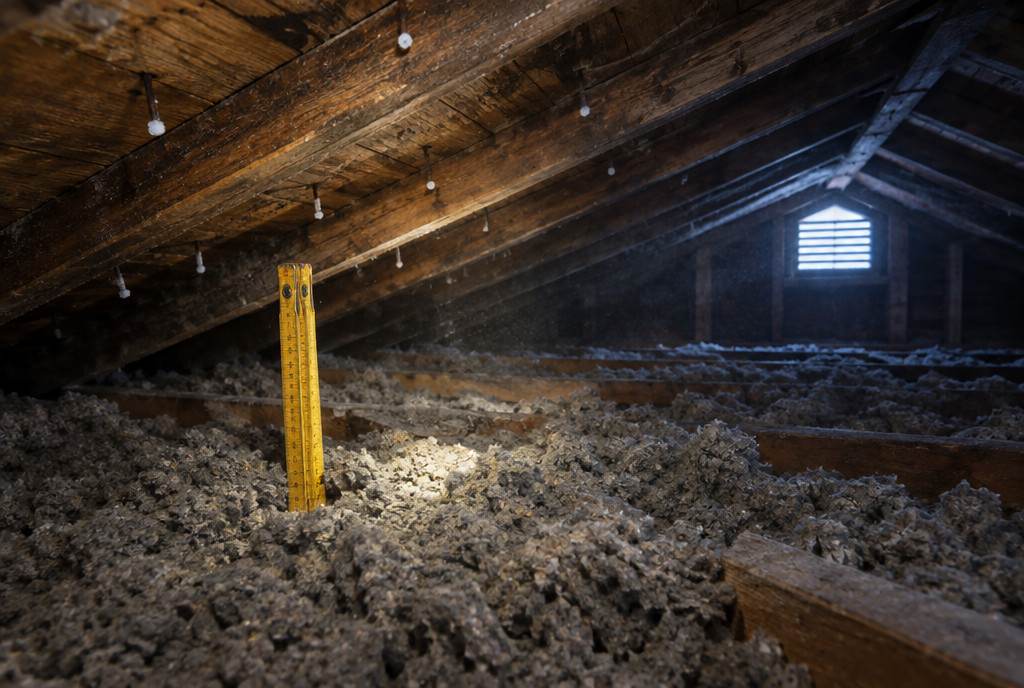
Of Guelph's 42,250 houses (single-detached, semi-detached, row houses and duplexes), 20% were built before 1961 and 54% before 1991, according to the 2021 Census. Attics in older houses commonly have a fraction of today's recommended insulation, and top-ups done over the years often buried air leaks instead of sealing them first.
Guelph gets about 4,331 heating degree-days a year, a measure of how much heating its climate needs, and its winter design temperature, the cold day heating systems are sized for, is −20.3°C. Those figures come from the climate data for Mount Forest, the closest comparable location in that data set (64 km away) in HOT2000, the home-energy software Natural Resources Canada (NRCan) gives energy advisors. That's about 10% more heating demand than the middle of the 70 cities we cover. The colder the climate, the faster added attic insulation pays for itself, and in a hot summer the same insulation keeps attic heat out of the bedrooms below.
Vermiculite. Loose, pebbly, grey-brown or silver-gold insulation may contain asbestos. Health Canada's advice is not to disturb it; have it sampled before any attic work. Asbestos and vermiculite testing in Guelph
The right order for the work
- Seal the air leaks first: top plates, pot lights, plumbing stacks, the hatch.
- Fix ventilation baffles so new insulation doesn't block soffit vents.
- Then top up the insulation. Burying unsealed leaks under new insulation wastes much of the benefit.
Great Lakes–St. Lawrence Southern Ontario and southern Quebec
What this means in Guelph’s climate
Cold winters and hot, humid summers: seal the attic, dry the basement, plan cooling.
This region has real winters and hot, humid summers, so bills come from both heating and cooling. Natural gas heats most Ontario homes, while most Quebec homes use low-cost electricity. An EnerGuide evaluation here should cover air sealing and the attic, cooling and dehumidification, and keeping the basement dry before insulating it.
- Seal air leaks and top up the attic. Air sealing is still the first retrofit. In the snowier Ottawa–Montreal–Sherbrooke belt, a leaky, under-insulated attic also causes ice dams. Ask: Ask for a blower door test and attic inspection, and whether old vermiculite insulation needs testing before any attic work.
What else homes in Guelph need →
Sources for this climate guide · checked October 26, 2026
- National Building Code of Canada 2020, climate data (NRC)
- Canadian Climate Normals 1991–2020 (ECCC)
- Keeping the Heat In (NRCan)
- Air-Source Heat Pump Sizing and Selection Guide (NRCan)
- Heating and Cooling With a Heat Pump (NRCan)
- Heat pump basics (NRCan)
- Gas and heat pump hybrid systems (NRCan)
- Primary heating systems by household, Table 38-10-0286-01 (Statistics Canada)
- Electricity price comparison, April 2025 (Hydro-Québec)
- Canada's top weather stories of 2018 (ECCC)
- Canada's top weather stories of 2022 (ECCC)
- Canada's top weather stories of 2023 (ECCC)
- Canada's most impactful weather stories of 2024 (ECCC)
- Canada's top weather stories of 2025 (ECCC)
- 2024 Cross-Canada Survey of Radon Exposure
- Guide for Radon Measurements in Homes (Health Canada)
- Conditions for thermal scans, ASTM C1060 summary (Cx Associates)
Communities served
Area guides for the surrounding region, with every town and hamlet listed: Dufferin County area guide (Orangeville, Shelburne, Mono, Grand Valley and more); Wellington County area guide (Fergus, Elora, Mount Forest, Erin and more).
NRCan-licensed service organizations serving Guelph
A service organization is a company that Natural Resources Canada (NRCan) licenses to deliver EnerGuide evaluations; its registered energy advisors do the home visit. Every EnerGuide evaluation includes an attic inspection: insulation depth, air leaks and red flags such as vermiculite or knob-and-tube wiring.
Only assessments from the seven HRSP-approved organizations qualify for the $600 Home Renovation Savings rebate and its assessment-path upgrade rebates; each listing below says whether it's one of them.
- Acacia Engineering HRSP-approved: No
- All Season Inspection HRSP-approved: No Profile
- AmeriSpec HRSP-approved: Yes Profile
- BEST Energy and Sustainability HRSP-approved: No
- Capital Home Energy HRSP-approved: No
- Clean Energy Solutions HRSP-approved: No
- Ecostep Energy Services HRSP-approved: No
- EnerQuality HRSP-approved: No
- EnerSolution HRSP-approved: No Profile
- EnviroCentre HRSP-approved: No
- ER Energy Solutions HRSP-approved: No
- GETS Energy HRSP-approved: No
- Green Canada Home Advisors HRSP-approved: No Profile
- Green Think HRSP-approved: No
- Greenbrain HRSP-approved: Yes Profile
- Isle Energy Consulting HRSP-approved: No
- MAP Energy HRSP-approved: No
- Reep Green Solutions HRSP-approved: No Non-profit network Profile
- Sensible Home Inspections HRSP-approved: No
- The Energuy HRSP-approved: Yes Profile
- Verdatech Energy Management and Consulting HRSP-approved: No
- CoEfficient Building Science HRSP-approved: No
Insulation programs in Guelph
Attic insulation inspection in Guelph: common questions
How much attic insulation should a Guelph house have?
Advisors commonly target around R-50 to R-60 in attics. Your EnerGuide report gives the recommendation for your house.
Can I top up the insulation myself?
Only after the air leaks are sealed and you've confirmed there is no vermiculite. The inspection tells you both.
Will more insulation stop ice dams?
Insulation helps, but ice dams are mostly caused by warm air leaking into the attic. Air sealing is the bigger fix.