How Halifax is built
- Before 1961 22%
- 1961–1990 42%
- 1991–2000 14%
- 2001 or later 22%
When to book in Halifax
Halifax gets about 3,870 heating degree-days a year, a measure of how much heating its climate needs, and its winter design temperature, the cold day heating systems are sized for, is −15.9°C. Those figures come from the climate data for Shearwater in HOT2000, the home-energy software Natural Resources Canada (NRCan) gives energy advisors. That gives Halifax a long window, roughly late fall to early spring, when the inside-outside difference comfortably exceeds the 10°C an infrared scan needs.
What the camera finds in Halifax houses
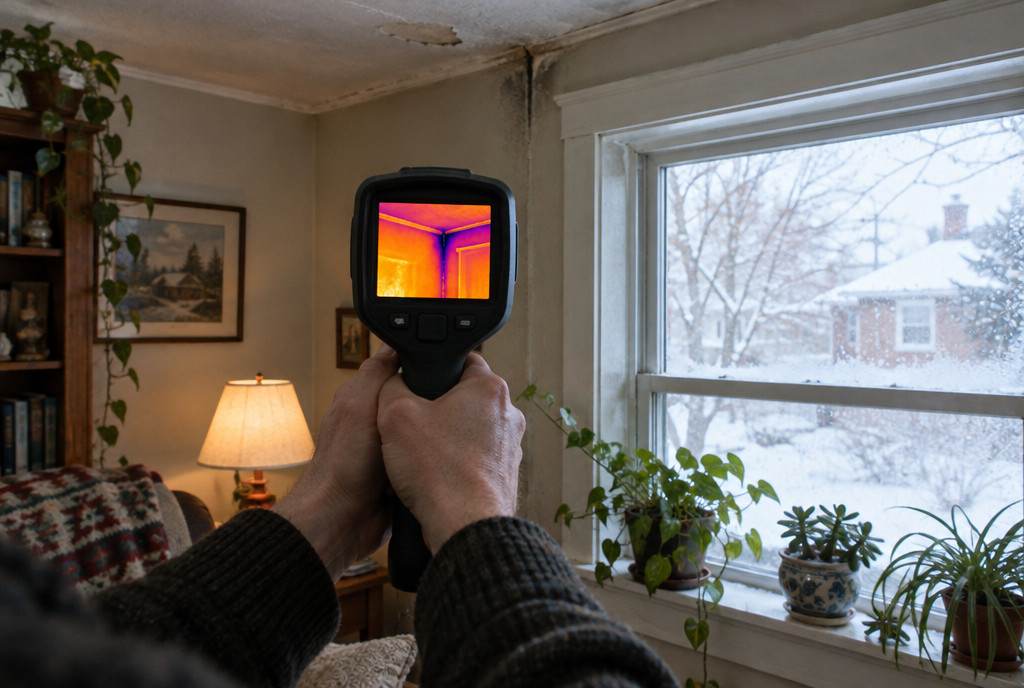
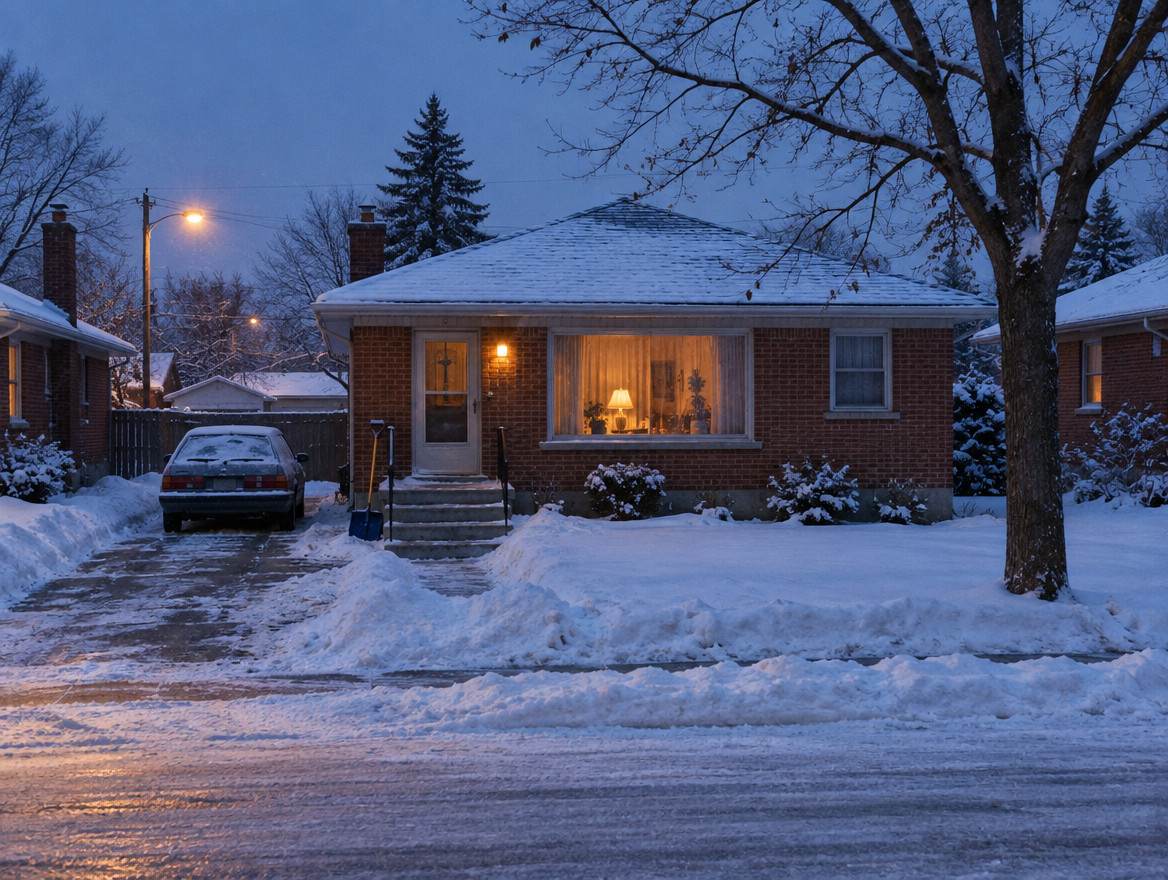
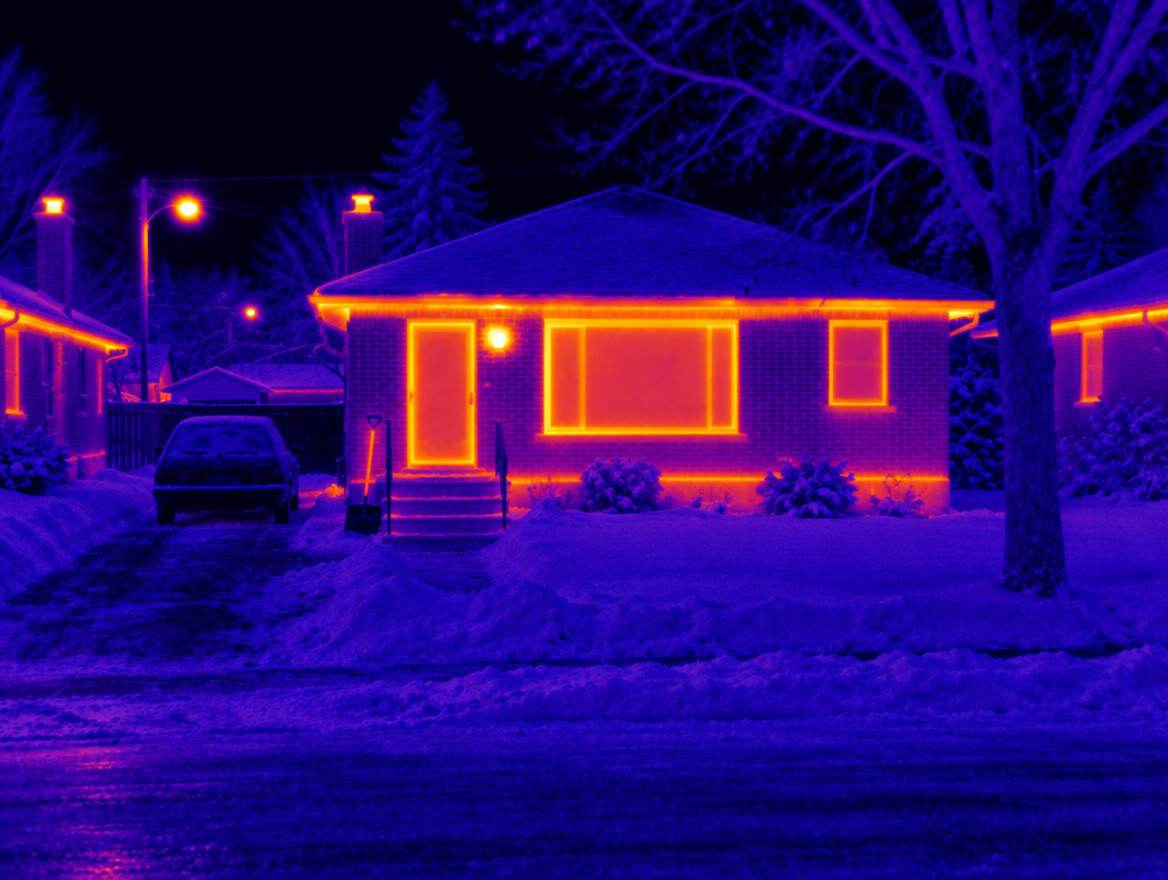
Of Halifax's 121,700 houses (single-detached, semi-detached, row houses and duplexes), 22% were built before 1961 and 63% before 1991, according to the 2021 Census. Older houses are where the camera earns its keep: empty or settled wall cavities, gaps at the top of walls, and cold corners where framing bridges the insulation. Run it with the blower door test depressurizing the house and every leak shows up as a cold streak.
What it costs
Most EnerGuide advisors include an infrared scan with the evaluation, but it isn't required, so confirm when you book. Efficiency Nova Scotia's Home Energy Assessment program charges a $199 program fee, waived for households under its income threshold, and covers the initial and final assessments. Moderate Income Rebate participants who paid up front get the $199 back when their rebates are issued.
Atlantic Canada Maritimes and Newfoundland
What this means in Halifax’s climate
Damp, windy, icy winters and costly oil: switch to heat pumps, seal, test for radon.
Why it matters here: Shows insulation gaps and air leaks.
Best timing: December to March, on a calm, overcast day with at least 10°C between inside and outside.
- Seal wind-driven leaks and the attic. Wind pushes cold air through gaps, and heavy, wet snow with frequent freezing rain makes a leaky attic prone to ice dams. Ask: Ask for a blower door test on a calm day, with a thermal scan to find wind-driven leaks.
What else homes in Halifax need →
Sources for this climate guide · checked October 26, 2026
- National Building Code of Canada 2020, climate data (NRC)
- Canadian Climate Normals 1991–2020 (ECCC)
- Keeping the Heat In (NRCan)
- Heat pumps, Canada Greener Homes (NRCan)
- Heat pump basics (NRCan)
- Heating and Cooling With a Heat Pump (NRCan)
- Primary heating systems by household, Table 38-10-0286-01 (Statistics Canada)
- Household heating oil prices, Table 18-10-0001-01 (Statistics Canada)
- Electricity price comparison, April 2025 (Hydro-Québec)
- Prevent oil tank spills (Government of Nova Scotia)
- Canada's top weather stories of 2019 (ECCC)
- Canada's top weather stories of 2022 (ECCC)
- Canada's top weather stories of 2023 (ECCC)
- 2024 Cross-Canada Survey of Radon Exposure
- Guide for Radon Measurements in Homes (Health Canada)
- Conditions for thermal scans, ASTM C1060 summary (Cx Associates)
- Canada's top weather stories of 2025 (ECCC)
NRCan-licensed service organizations serving Halifax
In Nova Scotia, EnerGuide home energy assessments are booked through Efficiency Nova Scotia's Home Energy Assessment program, which assigns one of its Delivery Agent Partners; NRCan's list shows no separate service organizations for Nova Scotia postal codes.
Programs and local help in Halifax
Thermal imaging inspection in Halifax: common questions
When is the best time for a thermal imaging inspection in Halifax?
Late fall through early spring, when it is at least 10°C colder outside than inside. Cold, overcast days with no direct sun on the walls give the clearest images.
Can a thermal camera see through walls?
No. It reads surface temperatures. Missing insulation or an air leak shows up because it changes the temperature of the wall or ceiling surface.
Who does thermal imaging in Halifax?
Ask when you book Efficiency Nova Scotia's Home Energy Assessment.
Is thermal imaging the same as a thermographic inspection?
Yes. Thermography, thermal imaging and infrared scanning all mean reading surface temperatures with an infrared camera.