How Surrey is built
- Before 1961 5%
- 1961–1990 34%
- 1991–2000 18%
- 2001 or later 43%
When to book in Surrey
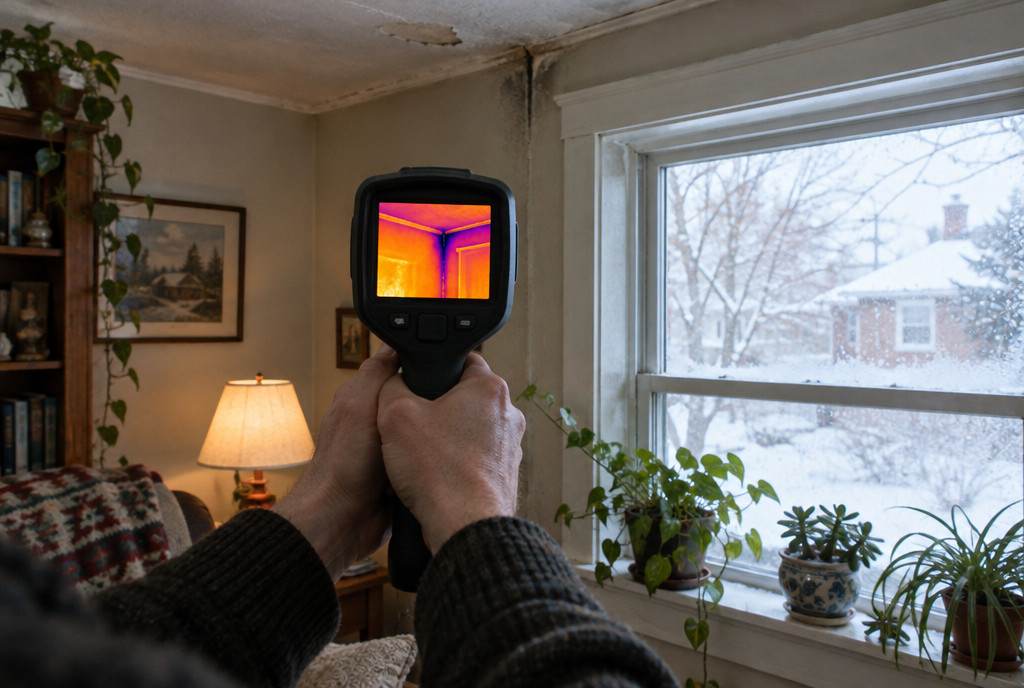
Surrey gets about 2,851 heating degree-days a year, a measure of how much heating its climate needs, and its winter design temperature, the cold day heating systems are sized for, is −6.3°C. Those figures come from the climate data for Pitt Meadows, the closest comparable location in that data set (13 km away) in HOT2000, the home-energy software Natural Resources Canada (NRCan) gives energy advisors. With winters that mild, a 10°C difference isn't guaranteed every day, so book the scan for a cold morning or evening, and ask the advisor to reschedule if the forecast is too warm.
What the camera finds in Surrey houses
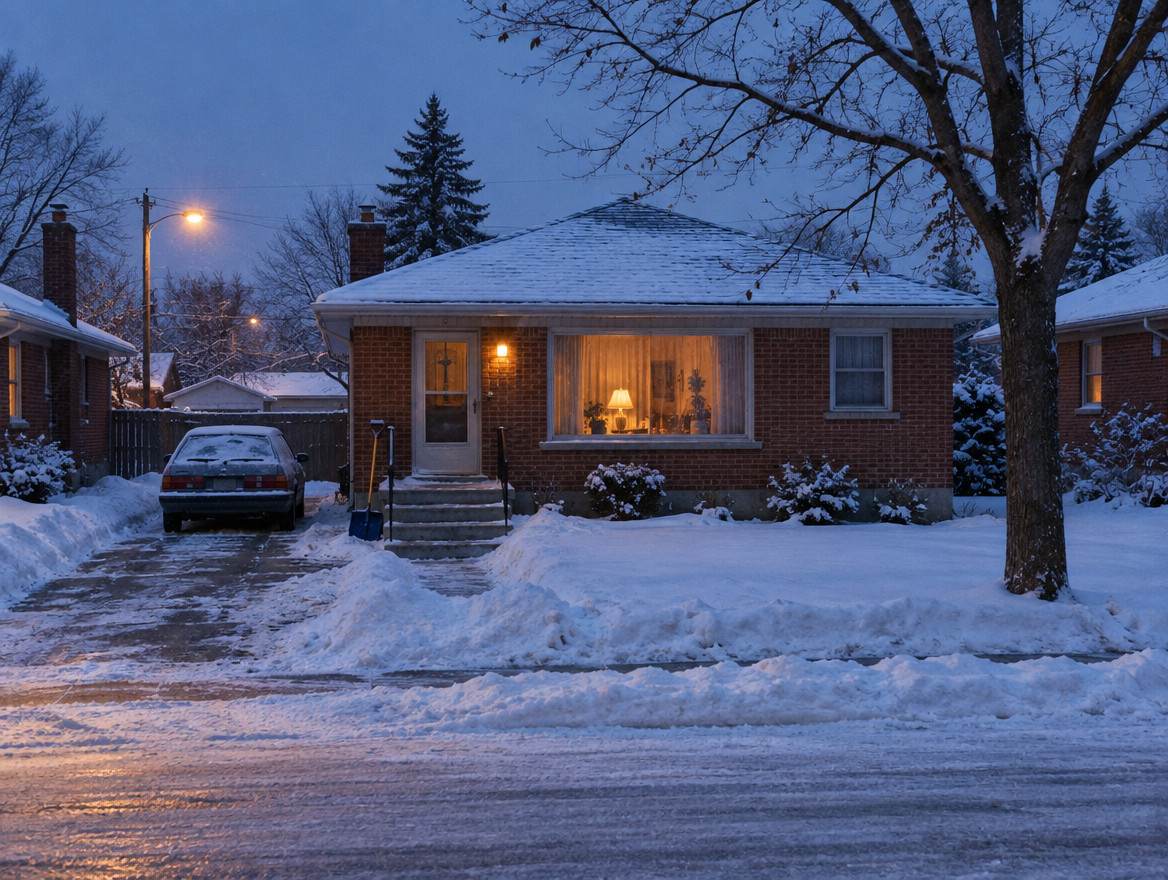
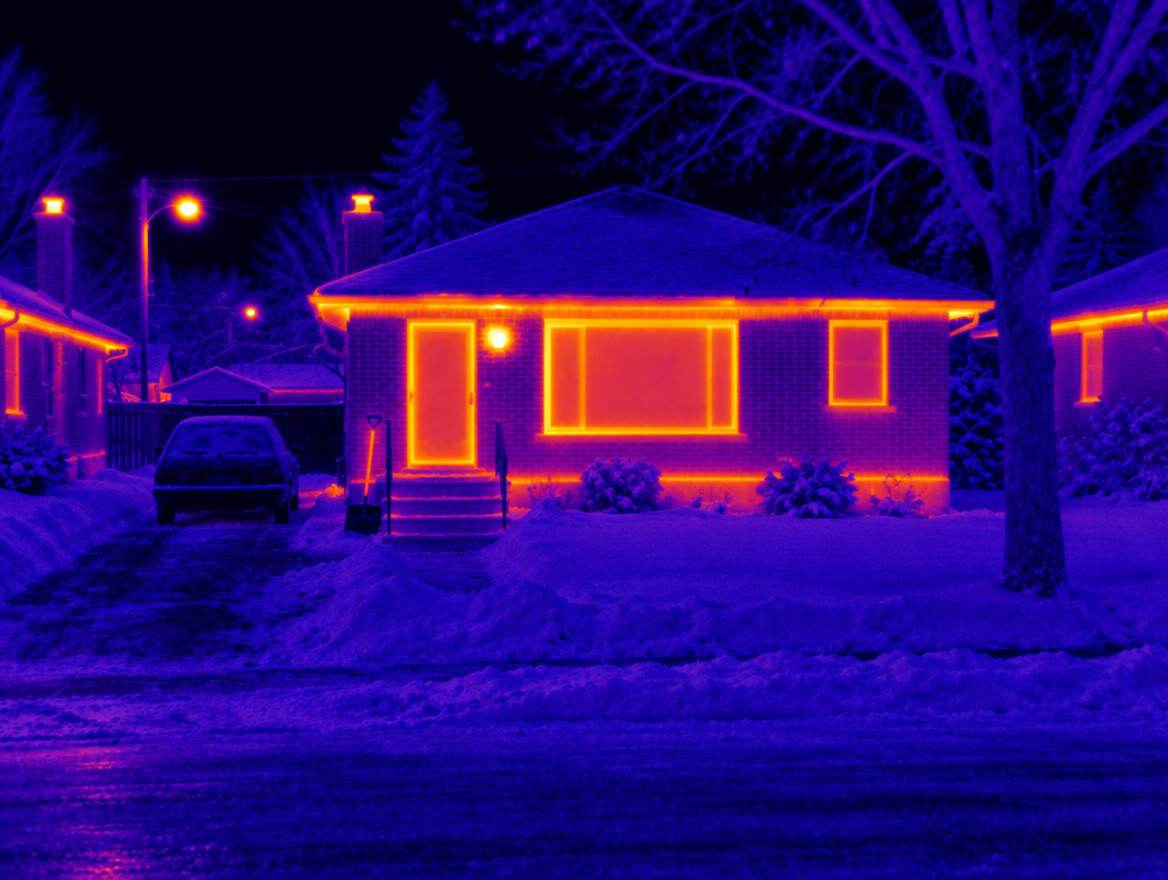
Of Surrey's 139,390 houses (single-detached, semi-detached, row houses and duplexes), 5% were built before 1961 and 39% before 1991, according to the 2021 Census. Older houses are where the camera earns its keep: empty or settled wall cavities, gaps at the top of walls, and cold corners where framing bridges the insulation. Run it with the blower door test depressurizing the house and every leak shows up as a cold streak.
What it costs
Most EnerGuide advisors include an infrared scan with the evaluation, but it isn't required, so confirm when you book. There's no provincial price list; the City of Nanaimo quotes $400–$500 as typical for an existing home. Several B.C. municipalities subsidize evaluations for their residents (see local programs below).
Coastal BC Lower Mainland and Vancouver Island
What this means in Surrey’s climate
Mild, wet winters and summer heat waves: fix moisture first, then cooling and heat pumps.
Why it matters here: Shows missing insulation and air leaks as temperature differences on walls and ceilings.
Best timing: December to February, early morning or evening, with at least 10°C between inside and outside, little sun and low wind.
- Seal air leaks, then top up the attic. NRCan calls air sealing the most important retrofit. Pair it with attic insulation: today's new-home minimum here is about R-39, a useful target for older attics. Ask: Ask for a blower door test before and after sealing, so you can see the drop in ACH50.
What else homes in Surrey need →
Sources for this climate guide · checked October 26, 2026
- National Building Code of Canada 2020, climate data (NRC)
- Canadian Climate Normals 1991–2020 (ECCC)
- Keeping the Heat In (NRCan)
- Air-Source Heat Pump Sizing and Selection Guide (NRCan)
- Heat pump basics (NRCan)
- Heating and Cooling With a Heat Pump (NRCan)
- Primary heating systems by household, Table 38-10-0286-01 (Statistics Canada)
- Electricity price comparison, April 2025 (Hydro-Québec)
- BC Coroners Service review of 2021 heat deaths
- Wildfire smoke, filtration and cooling (Island Health)
- Wildfire smoke: protecting your health (Government of Canada)
- Canada's top weather stories of 2020 (ECCC)
- Canada's most impactful weather stories of 2024 (ECCC)
- 2024 Cross-Canada Survey of Radon Exposure
- Guide for Radon Measurements in Homes (Health Canada)
- Conditions for thermal scans, ASTM C1060 summary (Cx Associates)
- Canada's top weather stories of 2022 (ECCC)
NRCan-licensed service organizations serving Surrey
A service organization is a company that Natural Resources Canada (NRCan) licenses to deliver EnerGuide evaluations; its registered energy advisors do the home visit. Most EnerGuide advisors bring an infrared camera, but it isn't a required part of the evaluation, so confirm when you book. The scan is most useful with the blower door running.
- Acacia Engineering
- All Season Inspection Profile
- AmeriSpec Profile
- Canada Energy Audit Profile
- Capital Home Energy
- CoEfficient Building Science
- Energy Werx Profile
- Enerhold Engineering Solutions
- Enerhome Consulting
- EnerSolution Profile
- EnerTech Solutions
- EnerVision
- Engreen Home
- ER Energy Solutions
- GETS Energy
- Green Canada Home Advisors Profile
- Green Think
- Homesol Building Solutions
- HomeStep.ca
- HomeTech Energy Solutions
- Sensible Home Inspections
- The Energuy Profile
- The House Whisperers
- VerdaTech Energy Management and Consulting
- City Green Solutions
- Greenbrain Profile
- Isle Energy Consulting
- NRGwise (A1 NRGwise Consulting) Profile
- ecoGEO Energy
Programs and local help in Surrey
Thermal imaging inspection in Surrey: common questions
When is the best time for a thermal imaging inspection in Surrey?
Pick a cold morning or evening in winter; the camera needs at least a 10°C difference between inside and outside, which isn't guaranteed every winter day in Surrey.
Can a thermal camera see through walls?
No. It reads surface temperatures. Missing insulation or an air leak shows up because it changes the temperature of the wall or ceiling surface.
Who does thermal imaging in Surrey?
Most of the 29 NRCan-licensed organizations serving Surrey bring an infrared camera to an EnerGuide evaluation; confirm when you book.
Is thermal imaging the same as a thermographic inspection?
Yes. Thermography, thermal imaging and infrared scanning all mean reading surface temperatures with an infrared camera.