How Yellowknife is built
- Before 1961 3%
- 1961–1990 54%
- 1991–2000 21%
- 2001 or later 22%
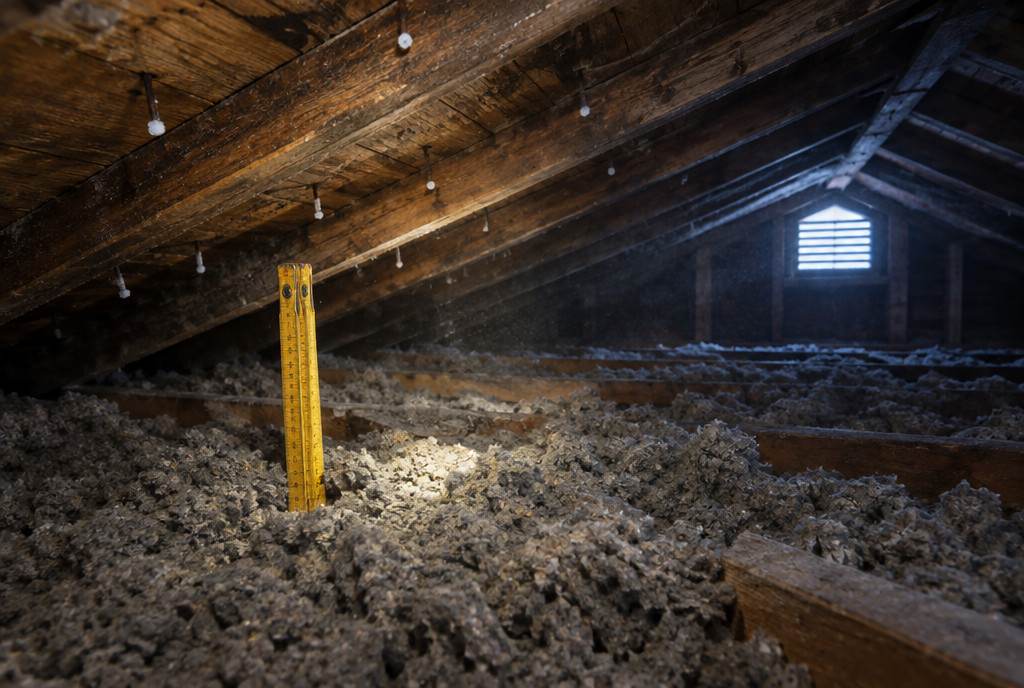
What inspections find in Yellowknife attics
Of Yellowknife's 5,225 houses (single-detached, semi-detached, row houses and duplexes), 3% were built before 1961 and 57% before 1991, according to the 2021 Census. Attics in older houses commonly have a fraction of today's recommended insulation, and top-ups done over the years often buried air leaks instead of sealing them first.
Yellowknife gets about 7,856 heating degree-days a year, a measure of how much heating its climate needs, and its winter design temperature, the cold day heating systems are sized for, is −39.2°C. Those figures come from the climate data for Yellowknife in HOT2000, the home-energy software Natural Resources Canada (NRCan) gives energy advisors. That's the highest heating demand of the 70 cities we cover. The colder the climate, the faster added attic insulation pays for itself.
Vermiculite. Loose, pebbly, grey-brown or silver-gold insulation may contain asbestos. Health Canada's advice is not to disturb it; have it sampled before any attic work. Asbestos and vermiculite testing in Yellowknife
The right order for the work
- Seal the air leaks first: top plates, pot lights, plumbing stacks, the hatch.
- Fix ventilation baffles so new insulation doesn't block soffit vents.
- Then top up the insulation. Burying unsealed leaks under new insulation wastes much of the benefit.
The North Yukon, NWT and Nunavut
What this means in Yellowknife’s climate
Extreme cold and costly energy: envelope first, reliable heat, safe oil tanks, permafrost.
The North has the longest, coldest winters we cover, with temperatures that reach −41°C. About half of Yukon homes heat with oil, and electricity costs more than in southern cities, so every bit of heat kept in saves real money. An EnerGuide evaluation here should put the building envelope first, then check heating reliability, oil tank safety, ventilation and humidity limits, and signs of permafrost movement.
- Envelope first: seal, insulate, upgrade windows. With the coldest winters we cover and costly fuel, envelope work saves more than equipment changes. Today's new-home minimums here, about R-59 attics and R-22 walls, are good targets. Ask: Ask for a blower door test with a thermal scan, and a list of envelope upgrades ranked by savings.
What else homes in Yellowknife need →
Sources for this climate guide · checked October 26, 2026
- National Building Code of Canada 2020, climate data (NRC)
- Canadian Climate Normals 1991–2020 (ECCC)
- Keeping the Heat In (NRCan)
- Air-Source Heat Pump Sizing and Selection Guide (NRCan)
- Heat pumps, Canada Greener Homes (NRCan)
- Heating and Cooling With a Heat Pump (NRCan)
- Yukon Energy Facts 2024 (Yukon Bureau of Statistics)
- Household heating oil prices, Table 18-10-0001-01 (Statistics Canada)
- Residential electricity rates, April 2026 (ATCO Electric Yukon)
- Residential rate schedule, July 2026 (Naka Power, Yellowknife)
- Rates and riders (Naka Power, Yellowknife)
- Energy profile: Northwest Territories (Canada Energy Regulator)
- Energy profile: Yukon (Canada Energy Regulator)
- Keep Your House on Solid Ground: permafrost guide (Government of the NWT)
- Permafrost in Nunavut: a homeowner's guide (Government of Nunavut)
- Permafrost thaw mapping, Whitehorse area (Yukon University)
- 2024 Cross-Canada Survey of Radon Exposure
- Guide for Radon Measurements in Homes (Health Canada)
- Canada's top weather stories of 2022 (ECCC)
- Canada's top weather stories of 2023 (ECCC)
- Conditions for thermal scans, ASTM C1060 summary (Cx Associates)
NRCan-licensed service organizations serving Yellowknife
In the Northwest Territories, the Arctic Energy Alliance, a non-profit, is the licensed service organization for Yellowknife.
A service organization is a company that Natural Resources Canada (NRCan) licenses to deliver EnerGuide evaluations; its registered energy advisors do the home visit. Every EnerGuide evaluation includes an attic inspection: insulation depth, air leaks and red flags such as vermiculite or knob-and-tube wiring.
- Arctic Energy Alliance
Insulation programs in Yellowknife
Attic insulation inspection in Yellowknife: common questions
How much attic insulation should a Yellowknife house have?
Advisors commonly target around R-50 to R-60 in attics. Your EnerGuide report gives the recommendation for your house.
Can I top up the insulation myself?
Only after the air leaks are sealed and you've confirmed there is no vermiculite. The inspection tells you both.
Will more insulation stop ice dams?
Insulation helps, but ice dams are mostly caused by warm air leaking into the attic. Air sealing is the bigger fix.